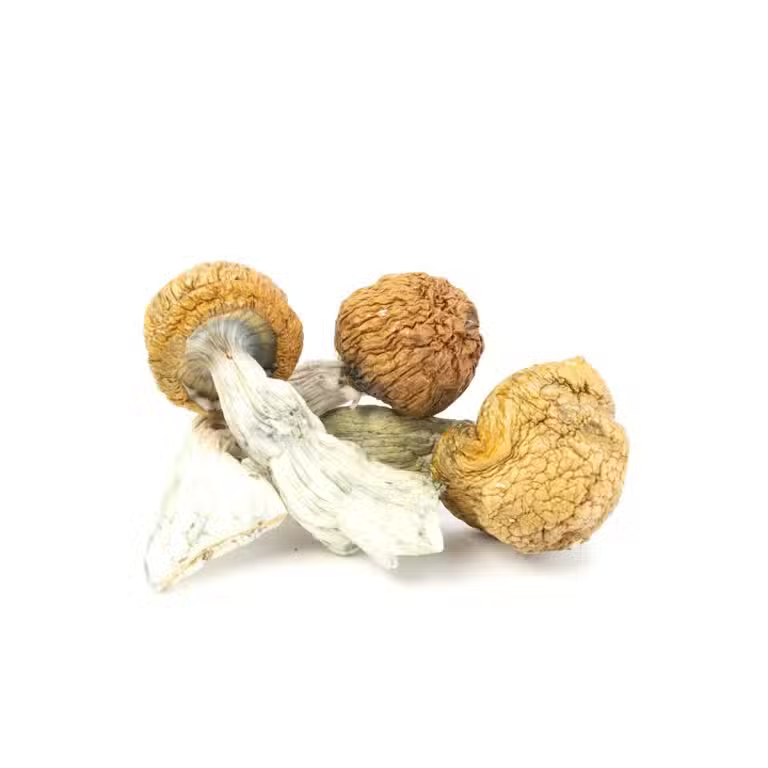
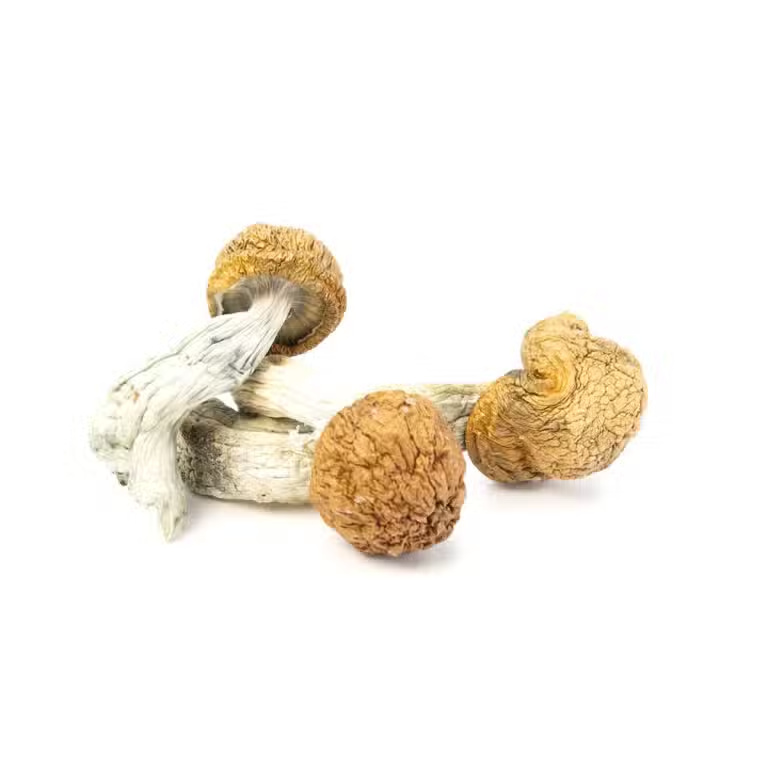
Blue Meanies Psilocybe cubensis: Species, Scientific Background and Safety Guide
1. Introduction
Blue Meanies Magic Mushrooms is a common search phrase associated with psychoactive fungi, but the name has an important scientific complication: it can refer to more than one mushroom. In many mycology references, Blue Meanies refers to Panaeolus cyanescens, while some communities also use the name for an informal variety of Psilocybe cubensis. These fungi belong to different genera and should not be treated as interchangeable.
Understanding this distinction is important for anyone researching mushroom taxonomy, fungal diversity or psychedelic science. Common names are often influenced by local terminology, historical usage and online communities. Scientific identification, however, relies on documented characteristics and, where necessary, laboratory analysis.
This guide explores the meaning of the Blue Meanies name, the two species commonly associated with it, their scientific classification, research interest, identification limitations, health considerations and international legal awareness.
2. What Are Blue Meanies Psilocybe cubensis?
Blue Meanies is not a formal scientific species name. It is a common name that has been applied to different mushrooms in different contexts.
The best-known scientific association is Panaeolus cyanescens, a species in the genus Panaeolus. The name is also sometimes applied to a variety of Psilocybe cubensis. Although both names are associated with psychoactive mushroom discussions, the two fungi have distinct taxonomic identities.
This distinction is especially important when reading online articles, research summaries, photographs and informal mushroom descriptions. A label that says Blue Meanies does not, by itself, confirm which species is being discussed.
For accurate scientific communication, it is better to identify the Latin binomial whenever the source provides one.
3. The Two Main Scientific References Behind the Name
3.1 Panaeolus cyanescens
Panaeolus cyanescens is a recognised species in the genus Panaeolus. It is widely discussed in scientific literature concerning psychoactive fungi.
The species has been studied for its taxonomy, distribution and chemical characteristics. Scientific descriptions discuss its relationship to other members of the genus and its place within the wider diversity of mushroom-forming fungi.
The common name Blue Meanies is frequently associated with this species. However, a common name should not replace scientific identification, particularly when a photograph or online description has not been independently verified.
3.2 Psilocybe cubensis
Psilocybe cubensis is a separate recognised species in the genus Psilocybe. It has received substantial attention in mycology and research into naturally occurring psychedelic compounds.
The phrase Blue Meanies is also used informally in some communities to describe a named variety associated with this species. Such informal labels are not necessarily formal taxonomic classifications.
NCBI lists Psilocybe cubensis as a species in its taxonomy database. The recognised species name remains Psilocybe cubensis, regardless of the informal variety label used in a particular discussion.
3.3 Why the distinction matters
The difference between Panaeolus cyanescens and Psilocybe cubensis is not merely a difference in naming.
They belong to different genera and have separate scientific classification histories. Their appearance, biological characteristics and research literature should be discussed independently.
When an article, photograph or specimen label uses the name Blue Meanies without identifying the scientific species, readers should treat the identification as uncertain.
4. Scientific Classification and Taxonomy
Taxonomy is the scientific process of naming, describing and organising living organisms. In mycology, taxonomy helps researchers distinguish fungi that may look similar but have different evolutionary relationships.
The two species associated with the Blue Meanies name have separate classifications.
Panaeolus cyanescens
- Kingdom: Fungi
- Phylum: Basidiomycota
- Class: Agaricomycetes
- Order: Agaricales
- Family: Galeropsidaceae, according to recent taxonomic research
- Genus: Panaeolus
- Species: Panaeolus cyanescens
Psilocybe cubensis
- Kingdom: Fungi
- Phylum: Basidiomycota
- Class: Agaricomycetes
- Order: Agaricales
- Genus: Psilocybe
- Species: Psilocybe cubensis
Taxonomic classifications can be revised as new genetic and morphological evidence becomes available. For that reason, scientific articles should identify the classification source and publication date rather than presenting every taxonomic detail as permanently settled.
5. Understanding the Genus Panaeolus
Panaeolus is a genus of mushroom-forming fungi within the order Agaricales. Members of this genus have attracted research attention because of their diversity, ecological relationships and the chemical properties reported in some species.
Scientific literature describes several morphological features across the genus, including differences in cap shape, stem structure, gill appearance and spore characteristics.
Some species are associated with nutrient-rich grassland environments and animal-associated habitats. However, habitat alone cannot establish a species identification.
Researchers use combinations of morphological observations, microscopic examination and molecular evidence to study relationships within the genus.
The 2022 review of psychedelic fungal genera provides an overview of the taxonomy, ecology and phylogenetic relationships of Panaeolus and related groups.
6. Understanding the Genus Psilocybe
Psilocybe is another genus of mushroom-forming fungi that has received extensive scientific attention.
Some species within the genus contain psilocybin and related compounds. These chemicals are of interest to researchers studying neurochemistry, perception and potential clinical applications.
Psilocybe cubensis is one of the best-known species associated with this research. Its scientific name is formally recognised in taxonomic databases.
It is important not to assume that all species within Psilocybe have identical chemical compositions or biological characteristics. Different species can vary, and informal names do not establish chemical identity.
7. Why Blue Meanies Is a Confusing Common Name
Common names are useful in everyday communication, but they can be unreliable in scientific discussions.
A single common name may be used for different organisms. Equally, one species may have several common names depending on its geographical or cultural context.
The Blue Meanies name illustrates this problem particularly well because it has been associated with both Panaeolus cyanescens and an informal Psilocybe cubensis variety.
This can cause problems when information is copied between websites without checking the underlying scientific source.
For an educational website, the most responsible approach is to:
- State the scientific name whenever it is known.
- Explain when a common name has multiple meanings.
- Avoid claiming that a photograph confirms a species.
- Separate research about Panaeolus from research about Psilocybe.
- Cite scientific publications and recognised taxonomy resources.
These practices improve accuracy and make educational content more useful to readers.
8. Reported Morphological Characteristics
Mycologists study mushroom morphology to understand fungal diversity and classification.
Morphological observations may include cap shape, surface texture, stem structure, gill arrangement, spore characteristics and microscopic features.
Members of Panaeolus are described in scientific literature as having distinctive gill and spore characteristics. Their appearance can vary with development, environment and other biological factors.
Psilocybe cubensis has its own documented morphological characteristics and has been studied through both traditional taxonomic methods and molecular research.
However, there is no reliable way to establish the identity of a specimen simply by comparing it with a photograph on a website.
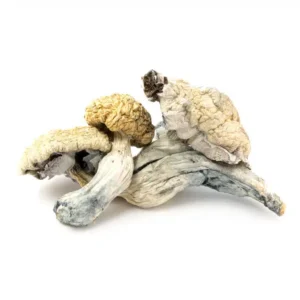
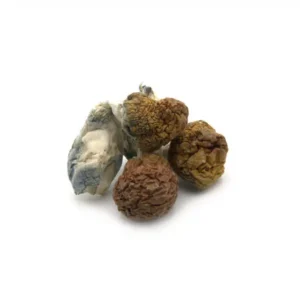
This is particularly important for dried specimens, where some characteristics may be altered or lost. Images used on educational websites should therefore be described as illustrative unless their identity has been independently established.
9. Scientific Research Into Psychoactive Fungi
Research into psychoactive fungi covers several fields, including fungal taxonomy, genetics, chemical analysis, neuroscience and clinical research.
Scientists investigate how species are related, how chemical compounds occur in different fungi and how those compounds interact with biological systems.
Modern analytical techniques allow researchers to examine fungal samples more systematically than relying on historical descriptions or informal labels alone.
9.1 Genetic research
DNA sequencing can help scientists investigate relationships between fungal specimens.
Genetic evidence is particularly useful when two fungi have similar external characteristics or when historical names have been applied inconsistently.
Molecular research also helps researchers revise classifications when new evidence shows that earlier groupings do not accurately represent evolutionary relationships.
9.2 Chemical research
Researchers use laboratory methods to investigate the chemical composition of certain fungi.
High-performance liquid chromatography and mass spectrometry are examples of analytical techniques used in scientific studies.
Such methods can provide information that cannot be reliably obtained from a mushroom’s colour, shape or common name.
9.3 Ecological research
Fungi play important roles in ecosystems. They contribute to nutrient cycling, decomposition and interactions with other organisms.
Research into Panaeolus includes investigation of species diversity, geographical distribution and ecological relationships.
This work contributes to broader knowledge of fungal biodiversity.
10. Psilocybin and Psilocin: A Scientific Overview
Psilocybin and psilocin are naturally occurring compounds associated with certain psychoactive fungi.
Psilocybin is converted into psilocin in the body. Psilocin interacts with serotonin receptors in the nervous system and can influence perception, mood and cognition.
Scientists have investigated these compounds because of their effects on brain activity and their potential role in carefully controlled clinical research.
However, research into isolated compounds under controlled conditions is not equivalent to evidence that unregulated mushroom specimens or commercial products are safe or medically effective.
The concentration and composition of naturally occurring compounds can vary. A common name or visual description does not establish the chemical properties of an individual specimen.
11. Current Research and Scientific Developments
The scientific understanding of Panaeolus continues to develop.
A systematic study published in January 2026 examined the taxonomy and phylogenetic relationships of Panaeolus sensu lato using morphological, genetic and chemical evidence.
The researchers investigated specimens and used laboratory analysis to examine psilocybin-producing characteristics in selected species. Their findings demonstrate why modern taxonomic research must combine multiple types of evidence rather than relying exclusively on appearance or historical naming.
This work also highlights the importance of distinguishing individual species when discussing psychoactive fungi.
For readers interested in the scientific side of Blue Meanies, this is an important reminder that taxonomy is an evolving research field.
12. Health and Safety Considerations
Psychoactive mushrooms can produce unpredictable psychological and physical effects.
Potential adverse effects reported in health literature include:
- Anxiety and panic.
- Confusion and disorientation.
- Altered perception and hallucinations.
- Nausea and vomiting.
- Increased heart rate and blood pressure.
- Dizziness and impaired coordination.
- Paranoia and severe psychological distress.
- Persistent psychological symptoms in some cases.
The National Center for Complementary and Integrative Health notes that psilocybin experiences can vary considerably and may involve unpleasant reactions, including fear, confusion and panic.
People with certain psychiatric vulnerabilities may face additional risks. Interactions with other substances and medications are also a concern.
An educational article should never suggest that a naturally occurring mushroom is automatically safe.
12.1 Mushroom misidentification
Misidentification is an important concern in mycology.
Different mushroom species can share visual characteristics, and some poisonous fungi may resemble species that people believe are psychoactive or edible.
Drying, photographing or giving a mushroom a familiar name does not establish its identity or remove potential toxins.
Never rely on a website image or informal name to decide whether a wild mushroom is safe.
12.2 When medical attention is necessary
Severe confusion, seizures, loss of consciousness, breathing difficulties, dangerous behaviour or suspected poisoning require urgent medical attention.
If someone may have eaten an unidentified wild mushroom, seek medical or poison-control advice promptly rather than waiting for symptoms to appear.
13. International Legal Considerations
The legal status of psilocybin-containing fungi varies between countries and jurisdictions.
Some governments regulate psilocybin and psilocin as controlled substances. Other legal systems have additional rules covering possession, preparation, production, importation, exportation, distribution and research.
A mushroom’s natural origin does not automatically make it legal to possess, sell or distribute.
Readers should consult current government legislation and official regulatory information before engaging in any activity involving controlled substances.
MushroomsRevival’s educational material should not be interpreted as legal advice or as confirmation that a particular activity is permitted in a reader’s country.
14. The Importance of Responsible Mycology Education
Mycology is a broad scientific field that includes the study of edible fungi, medicinally researched species, environmental fungi and organisms of ecological importance.
Responsible educational resources should distinguish between scientific evidence, historical descriptions, community terminology and unsupported online claims.
For topics involving psychoactive mushrooms, accurate naming and careful discussion of health risks are especially important.
Readers should be encouraged to consult scientific publications, university resources, museum collections and recognised taxonomy databases.
The purpose of education is to improve understanding, not to encourage unsafe identification or illegal activity.
15. Why Choose MushroomsRevival for Mushroom Education?
MushroomsRevival aims to make mushroom-related information accessible to a broad international audience.
Educational resources can help readers understand the diversity of fungi, the terminology used by mycologists and the scientific methods used to study mushroom species.
For a subject such as Blue Meanies, accuracy begins with explaining that the common name may refer to more than one species.
Our educational approach focuses on:
- Clear explanations of fungal taxonomy.
- Scientific names and classification.
- Research-based information.
- Transparent discussion of identification limitations.
- Health and safety awareness.
- Recognition that laws differ between countries.
MushroomsRevival encourages readers to approach mushroom science with curiosity, responsibility and respect for reliable evidence.
16. Frequently Asked Questions
What are Blue Meanies Magic Mushrooms?
Blue Meanies is a common name associated with more than one psychoactive mushroom. It is frequently used for Panaeolus cyanescens and is also used informally for a variety of Psilocybe cubensis.
Are Blue Meanies and Panaeolus cyanescens the same thing?
The name Blue Meanies is commonly associated with Panaeolus cyanescens. However, because the name is also used in other contexts, it is important to check the scientific name provided by the source.
Are Blue Meanies and Psilocybe cubensis the same species?
No. Panaeolus cyanescens and Psilocybe cubensis are different species belonging to different genera. The Blue Meanies name may be applied informally to either in different contexts.
Why are they called Blue Meanies?
Blue Meanies is a common name used in discussions of certain psychoactive fungi. Common names do not necessarily follow formal scientific naming conventions and may have different meanings in different communities.
Can Blue Meanies be identified from a photograph?
A photograph cannot reliably establish a mushroom’s scientific identity or safety. Accurate identification may require expert examination and laboratory methods.
What are psilocybin and psilocin?
Psilocybin and psilocin are compounds associated with certain psychoactive fungi. Psilocybin is converted into psilocin in the body, and psilocin interacts with serotonin receptors.
Are Blue Meanies legal worldwide?
No. Laws vary significantly between countries and jurisdictions. Readers should consult current official legislation rather than relying on general online descriptions.
Is this article a recommendation to consume psychoactive mushrooms?
No. This article is provided for scientific and educational purposes. It does not recommend consumption, provide medical advice or offer instructions for obtaining or cultivating controlled substances.
17. Conclusion
Blue Meanies Magic Mushrooms is a widely searched phrase, but its scientific meaning requires careful explanation. The name is commonly associated with Panaeolus cyanescens and is also used informally in discussions of Psilocybe cubensis. These are separate fungal species with different taxonomic identities.
Understanding the difference helps readers interpret scientific publications, evaluate online information and avoid treating informal mushroom names as verified identifications.
As research into fungal diversity and psychoactive compounds continues, reliable scientific sources remain essential. MushroomsRevival encourages responsible mycology education, accurate taxonomy, awareness of health risks and respect for applicable laws.
Explore the MushroomsRevival educational library to learn more about fungal diversity, mushroom classification and current mycology research.
Educational disclaimer: This article is provided for general scientific and mycology education only. It is not a product offer, medical recommendation, legal opinion or guide to obtaining, cultivating or consuming controlled substances.
Reviews
There are no reviews yet.