Introduction
B+ mushrooms are one of the better-known cultivated varieties associated with Psilocybe cubensis. They have been discussed extensively among mycology enthusiasts because of their distinctive appearance, cultivation history, and association with psilocybin-producing mushrooms.
Although B+ is commonly referred to as a “strain,” it is important to understand that it is not a separate mushroom species. It is generally used to describe a cultivated lineage within Psilocybe cubensis.
This guide explores what B+ mushrooms are, how they are described, how they differ from other P. cubensis varieties, and some important considerations when researching them.
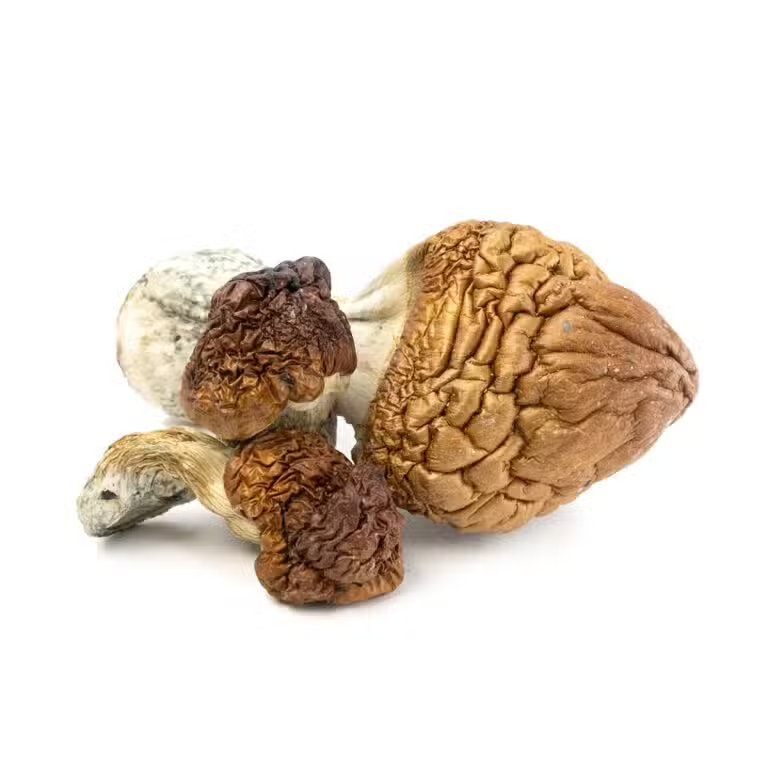
What Are B+ Mushrooms?
B+ is a name used for a cultivated variety or lineage of Psilocybe cubensis, a species of mushroom known for naturally producing the psychedelic compounds psilocybin and psilocin.
Psilocybe cubensis belongs to the genus Psilocybe and is associated with warm, humid environments. The species has become particularly well known among mushroom researchers and mycology communities.
The B+ name refers to a particular cultivated lineage rather than a completely different species.
What Do B+ Mushrooms Look Like?
B+ mushrooms are often described as having relatively broad caps with colors ranging from light tan to caramel brown.
Their stems are typically pale and can become relatively thick as the mushroom develops. Mature caps may expand and flatten as they grow.
However, there is considerable natural variation. Appearance can be influenced by:
- Genetics
- Age
- Temperature
- Humidity
- Growing environment
- Available nutrients
For this reason, not every B+ specimen will look exactly the same.
B+ and Psilocybe Cubensis
Understanding the relationship between B+ and Psilocybe cubensis is important.
Psilocybe cubensis is the species, while B+ is a name associated with a cultivated lineage of that species.
There are many other cultivated varieties associated with P. cubensis. They can have differences in appearance and growth characteristics while still belonging to the same species.
The terminology used by mushroom-growing communities is not always scientifically standardized, so descriptions of particular varieties can sometimes differ between sources.
What Compounds Are Found in Psilocybe Cubensis?
Psilocybe cubensis naturally produces the compounds psilocybin and psilocin.
Psilocybin is converted by the body into psilocin. These compounds interact with serotonin receptors in the brain and can produce significant changes in perception, mood, sensory awareness, and thought processes.
The concentration of these compounds can vary between individual mushrooms. Consequently, the name or appearance of a cultivated variety should not be treated as a reliable indicator of chemical concentration.
Why Are B+ Mushrooms Well Known?
B+ has developed a recognizable place in mushroom-growing and mycology communities.
Its popularity is often associated with its distinctive appearance and its long-standing presence in discussions surrounding cultivated P. cubensis varieties.
The variety is also frequently mentioned alongside other commonly known cultivated lineages.
However, it is useful to distinguish community terminology from formal scientific taxonomy. A name used by growers does not necessarily represent a formally recognized taxonomic category.
B+ Compared With Other Cubensis Varieties
B+ is only one of many cultivated Psilocybe cubensis varieties.
Different varieties may show differences in:
- Cap shape
- Cap color
- Stem characteristics
- Growth patterns
- Size
- Genetic lineage
- Environmental responses
These differences do not necessarily mean that one variety is a completely different species.
It is also important to be cautious about claims that a particular named variety always produces a specific experience. Individual mushrooms can vary considerably.
Understanding Psilocybin Mushroom Experiences
Because P. cubensis contains psilocybin and psilocin, consuming these mushrooms can produce significant changes in consciousness and perception.
Reported effects can include:
- Changes in visual perception
- Altered sense of time
- Changes in mood
- Intensified emotions
- Changes in thought patterns
- Increased sensory awareness
Not every experience is positive. Some people may experience anxiety, confusion, paranoia, nausea, dizziness, or other unwanted effects.
Individual experiences can vary depending on numerous factors, including personal sensitivity, environment, expectations, mental state, and interactions with other substances.
Important Safety Considerations
Psilocybin-containing mushrooms are psychoactive substances and should not be assumed to be risk-free.
People can react differently to psychoactive substances, and certain medical or psychiatric circumstances may increase potential risks.
Interactions with medications or other substances can also be important considerations. Anyone with questions about potential health risks should speak with a qualified healthcare professional.
Wild mushroom identification also requires considerable expertise. Some poisonous mushrooms can resemble other species, and consuming an incorrectly identified mushroom can cause serious poisoning.
Is B+ Psilocybe Cubensis Legal?
The legal status of psilocybin and psilocybin-containing mushrooms varies significantly around the world.
Some countries and jurisdictions prohibit possession, cultivation, sale, or distribution, while others have introduced limited exemptions or regulated programs.
Because laws can change, it is important to consult current official regulations applicable to your location.
Do not assume that laws applying to one country or state also apply elsewhere.
Frequently Asked Questions About B+ Mushrooms
Is B+ a species of mushroom?
No. B+ is generally used to describe a cultivated variety or lineage associated with Psilocybe cubensis.
What is Psilocybe cubensis?
Psilocybe cubensis is a mushroom species known for naturally producing the psychedelic compounds psilocybin and psilocin.
What do B+ mushrooms look like?
They are commonly described as having light brown to caramel-colored caps and pale stems, although their appearance can vary depending on genetics and growing conditions.
Does B+ contain psilocybin?
B+ is associated with Psilocybe cubensis, a species that naturally produces psilocybin and psilocin.
Are all B+ mushrooms identical?
No. Individual specimens can vary in size, shape, coloration, and chemical composition.
Is B+ legal?
The answer depends on local law. Psilocybin-containing mushrooms are controlled in many jurisdictions, while some areas have different regulations or limited exemptions.
Final Thoughts
B+ mushrooms are a well-known cultivated variety associated with Psilocybe cubensis. Learning about their taxonomy, appearance, history, and chemical characteristics provides useful context for anyone interested in mushroom biology and mycology.
The most important distinction to remember is that B+ is not a separate species. It is a name used for a cultivated lineage within Psilocybe cubensis.
Because psilocybin-containing mushrooms can involve significant legal and health considerations, information should always be evaluated carefully and current local regulations should be consulted.