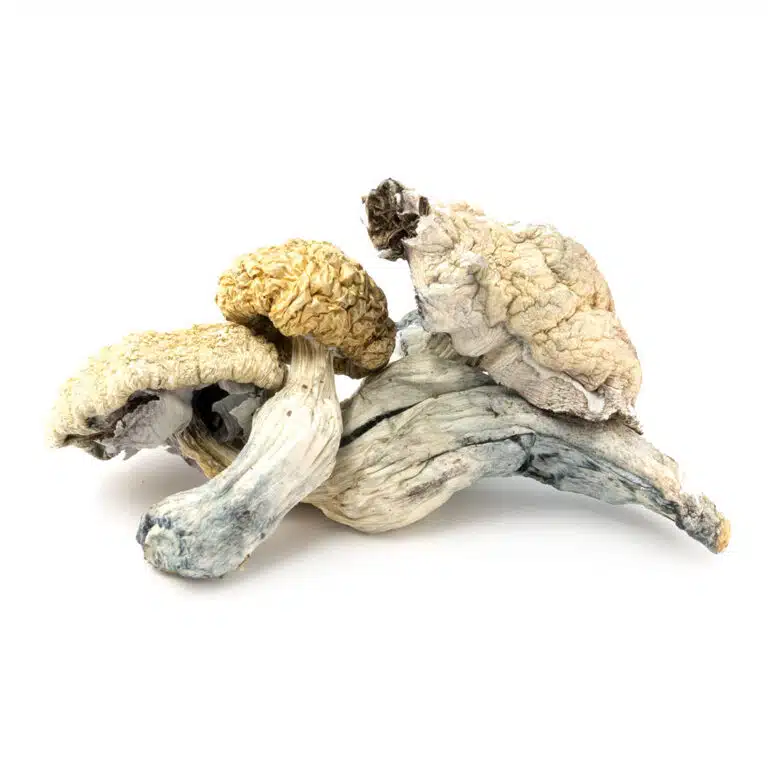
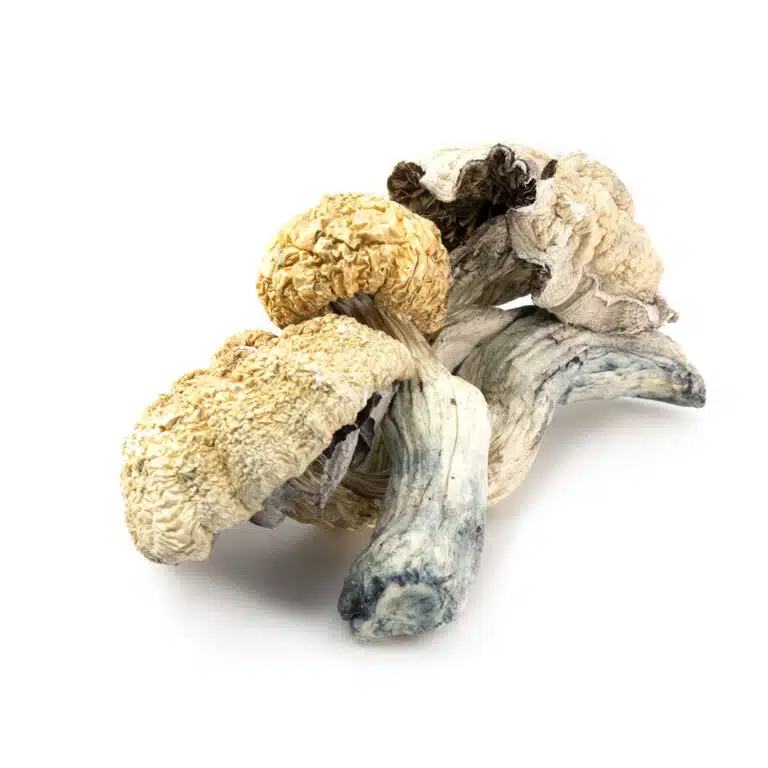
Buy Amazonian Psilocybe cubensis: Species Information, Taxonomy and Research
1. Introduction
Amazonian is a commonly used variety name associated with Psilocybe cubensis, a species of fungus known for containing the naturally occurring psychoactive compounds psilocybin and psilocin. The name appears in discussions of mushroom diversity, mycology and psychedelic mushroom research. Understanding what the name represents requires looking beyond informal labels and examining the scientific classification of the organism.
At MushroomsRevival, our educational content aims to help readers understand the diversity of fungi through accessible information about taxonomy, scientific research, biodiversity and responsible awareness. This article explores the background of the Amazonian name, the classification of Psilocybe cubensis, the limitations of informal variety names and important legal and safety considerations.
It is important to distinguish between a scientifically recognised species and a name used informally to describe a particular variety. Amazonian is not a separately established species simply because it appears as a distinct name in popular mushroom discussions.
2. What Is Amazonian Psilocybe cubensis?| Amazonian Psilocybe cubensis For Sale
Amazonian is a commonly encountered informal name associated with Psilocybe cubensis. The scientific species belongs to the genus Psilocybe, a group of fungi that includes multiple species with different biological and geographical characteristics.
The word Amazonian suggests a geographical association with the Amazon region. However, a variety name alone does not establish the exact geographical origin, genetic ancestry or scientific identity of an individual specimen.
This distinction matters because informal mushroom names are not always consistently applied. Different suppliers, publications and online communities may use the same name differently. Without reliable documentation and scientific verification, the label should not be treated as proof of origin or genetic uniqueness. Buy Amazonian Psilocybe cubensis
Understanding the name
The term Amazonian is generally used as a descriptive variety name rather than a formal botanical classification. It may appear in informal discussions, educational material and historical references concerning Psilocybe cubensis.
Scientific names have a more formal purpose. They help researchers communicate about organisms using a shared classification system rather than relying entirely on regional or commercial terminology.
For this reason, the scientific name Psilocybe cubensis is the more important classification when discussing the organism in a scientific context.
3. Scientific Taxonomy and Classification
Taxonomy is the scientific discipline concerned with naming, describing and classifying living organisms. It helps researchers organise biological diversity and understand relationships between different organisms.
The accepted scientific name is Psilocybe cubensis (Earle) Singer, published in its current combination in 1948. An earlier name associated with the species was Stropharia cubensis, published by Earle in 1906.
A simplified classification is:
| Classification | Name |
|---|---|
| Domain | Eukaryota |
| Kingdom | Fungi |
| Phylum | Basidiomycota |
| Class | Agaricomycetes |
| Order | Agaricales |
| Genus | Psilocybe |
| Species | Psilocybe cubensis |
Taxonomic databases may differ in some higher-level family assignments as fungal classification develops. The species name is the most useful stable reference for this educational discussion.
The National Center for Biotechnology Information maintains a taxonomy record for Psilocybe cubensis under Taxonomy ID 181762. Index Fungorum and Species Fungorum also maintain records of its scientific nomenclature. Buy Amazonian Psilocybe cubensis
4. Understanding the Genus Psilocybe & Where to Get Amazonian Psilocybe cubensis Online
Psilocybe is a genus of fungi within the order Agaricales. It contains numerous species distributed across different environments and geographical regions.
The genus is particularly important in scientific research because some of its members contain psilocybin and related compounds. These compounds have attracted interest from researchers studying fungal chemistry, neuroscience, pharmacology and the history of human interactions with fungi.
However, not every mushroom that resembles a member of this genus belongs to it. Similar physical characteristics can occur in unrelated fungi, making casual identification unreliable.
Scientific classification therefore involves more than assigning a familiar name based on appearance. Researchers may use microscopic characteristics, molecular evidence, documented specimens and comparisons with established taxonomic references.
5. Biological Background of Psilocybe cubensis|Order Amazonian Psilocybe cubensis
Psilocybe cubensis is a basidiomycete fungus. Basidiomycetes are a major group of fungi that includes many familiar mushrooms.
Like other fungi, it is part of a much larger biological system involving fungal cells, genetic material, environmental relationships and reproductive structures.
Fungi are neither plants nor animals. They form their own biological kingdom and perform important ecological functions in natural environments.
Research into fungal biology can help explain how different species are related, how fungal organisms interact with their surroundings and how their chemical characteristics vary.
Fungal biodiversity
Fungal biodiversity is considerably broader than the range of mushrooms commonly seen in shops, gardens or forests. Many fungi are microscopic or spend much of their life cycle in forms that are not immediately recognisable as mushrooms.
The visible mushroom is only one part of a fungus’s biological life cycle. Scientific research examines the organism as a whole rather than relying only on its visible appearance. Buy Amazonian Psilocybe cubensis
6. Amazonian as an Informal Variety Name
One of the most important subjects when discussing Amazonian is the difference between informal variety names and formal scientific names.
In popular mushroom terminology, names such as Amazonian, Golden Teacher, B+ and Penis Envy are often associated with Psilocybe cubensis. These names are not all recognised as separate species by formal taxonomic authorities.
An informal label may reflect historical usage, community terminology or a claimed origin. It does not automatically establish that specimens carrying that label form a scientifically distinct genetic group.
Why informal names can be confusing
There are several reasons why informal mushroom names should be interpreted carefully:
- Different communities may use names inconsistently.
- Historical descriptions may not be supported by modern genetic evidence.
- A commercial label may not have independent scientific verification.
- Geographical names do not necessarily prove geographical origin.
- Appearance alone cannot establish genetic identity.
For readers interested in mycology, understanding these limitations is more useful than assuming that every familiar name represents a formally recognised biological category.
7. Scientific Research and Psilocybin
Psilocybin is a naturally occurring compound that has attracted increasing scientific attention. Researchers have investigated its chemistry, metabolism, interactions with the nervous system and potential applications in controlled clinical research.
After entering the human body, psilocybin is converted into psilocin, a compound that interacts with serotonin receptors in the brain.
Scientific interest includes several areas:
Neuroscience: Researchers investigate how psilocybin-related compounds interact with brain signalling systems and influence patterns of neural activity.
Pharmacology: Studies examine how compounds interact with biological systems, including their absorption, metabolism and effects.
Psychiatric research: Some clinical studies have investigated psilocybin-assisted approaches in carefully supervised research settings. These studies do not establish that unregulated mushroom products are safe or effective treatments.
Fungal chemistry: Researchers investigate the production and variation of naturally occurring compounds in different fungal organisms.
It is essential to distinguish controlled research from recreational use or commercial health claims. Research findings involving carefully characterised substances and supervised participants cannot automatically be applied to unidentified mushroom specimens.
8. Why Accurate Mushroom Identification Matters
Mushroom identification is a specialist area of mycology. Different fungal species can have similar visible characteristics, and mistakes can have serious consequences.
A common name, photograph or seller’s label cannot independently establish a mushroom’s identity.
Scientific identification may involve multiple forms of evidence, including:
- Documented specimen information.
- Microscopic examination.
- Comparison with established taxonomic literature.
- Molecular and genetic analysis.
- Expert assessment by qualified mycologists.
Research has documented problems with fungal misidentification in scientific collections and inconsistencies in the application of species names. This demonstrates why accurate identification is an important part of fungal research.
A particularly important safety issue is that some poisonous fungi can resemble other mushrooms. Consuming an unidentified mushroom based on an online photograph or informal identification can result in serious poisoning.
This page is educational and should never be used as a field identification guide or as confirmation that a specimen is safe.
9. Health and Safety Considerations
Psilocybin-containing mushrooms can produce significant psychological and physical effects. These effects may be unpredictable and can vary according to the substance, individual circumstances and other factors.
Potential adverse effects can include:
- Anxiety or panic.
- Confusion and disorientation.
- Changes in perception.
- Nausea and vomiting.
- Increased heart rate.
- Elevated blood pressure.
- Distressing psychological reactions.
- Impaired judgement and coordination.
People with certain psychiatric vulnerabilities may face additional risks. Interactions with other substances and medications are also an important consideration.
A further concern is that products labelled with informal variety names may not have verified chemical composition or potency. A familiar label does not guarantee consistent contents. Buy Amazonian Psilocybe cubensis
Anyone experiencing a severe or unexpected reaction after exposure should seek urgent medical attention.
10. Legal Considerations Around the World
The legal status of psilocybin and psilocybin-containing mushrooms varies between countries and jurisdictions.
Some jurisdictions prohibit possession, sale, distribution or cultivation. Others have limited exceptions, regulated research arrangements or specific legal frameworks. Laws can also distinguish between substances, preparations, research activities and personal possession.
Readers should not assume that a product or activity is lawful simply because it is discussed online or available in another country.
Before engaging with any activity involving controlled substances, consult the relevant official government legislation and regulatory authorities in the jurisdiction concerned.
International legal differences
A worldwide educational website should avoid presenting one country’s rules as universal. Legal requirements can change, and the same activity may be treated differently in neighbouring jurisdictions. Buy Amazonian Psilocybe cubensis
MushroomsRevival encourages readers to consult current official legal sources rather than relying on informal online discussions or commercial claims.
This article is not legal advice and does not authorise possession, purchase, distribution or use.
11. The Importance of Responsible Mycology Education
Responsible mycology education involves more than learning the names of different mushrooms. It includes understanding scientific uncertainty, respecting biodiversity, interpreting research carefully and recognising the limitations of visual identification.
A useful educational resource should distinguish verified scientific information from informal terminology. It should also explain when a claim needs further evidence.
For example, a geographical name should not automatically be interpreted as proof of origin. Similarly, an informal variety label should not be presented as a scientifically established subspecies or species without appropriate evidence.
Readers can improve their understanding by consulting recognised taxonomic databases, peer-reviewed scientific publications and reputable educational institutions.
12. Why Choose MushroomsRevival for Mushroom Education?
MushroomsRevival aims to provide accessible information about mushrooms, fungal diversity and mushroom-related subjects.
Our educational approach focuses on:
- Clear explanations of mushroom terminology.
- Scientific names and classification.
- Awareness of fungal biodiversity.
- Responsible interpretation of research.
- Recognition of identification limitations.
- Awareness of health and legal considerations.
We believe useful mushroom education should be transparent about what is known, what remains uncertain and where readers can find reliable additional information.
Our wider website also explores culinary mushrooms, dried mushroom varieties, functional mushroom products and mushroom cultivation equipment. These subjects have different requirements and should be discussed with appropriate scientific and product-specific context.
13. Frequently Asked Questions
What is Amazonian Psilocybe cubensis?
Amazonian is a commonly used informal variety name associated with Psilocybe cubensis, a species of fungus known to contain psilocybin and psilocin.
Is Amazonian a separate mushroom species?
No. The name Amazonian is generally used informally in connection with Psilocybe cubensis. It is not, by itself, a separately established scientific species.
What is the scientific name of Amazonian mushrooms?
The scientific species name associated with the informal Amazonian label is Psilocybe cubensis.
Does Amazonian prove that a mushroom came from the Amazon?
No. An informal geographical name does not establish the actual origin of an individual specimen.
What is the difference between a species and a variety name?
A species is a formal taxonomic rank used in biological classification. An informal variety name may be used in communities or commercial descriptions without representing a formally recognised taxonomic group.
Does Psilocybe cubensis contain psilocybin?
The species is recognised as a psilocybin-containing fungus. However, the chemical composition of an individual specimen cannot be determined reliably from its informal name or appearance.
Can a photograph confirm that a mushroom is Amazonian?
No. A photograph cannot reliably establish the genetic identity, chemical composition or geographical origin of a specimen.
Is Amazonian legal worldwide?
No. Laws vary between jurisdictions. Readers should consult current official legal sources in their country or region.
14. Conclusion
Amazonian is a commonly used name associated with Psilocybe cubensis, a scientifically recognised fungal species that has attracted attention in taxonomy, fungal chemistry and neuroscience research. Buy Amazonian Psilocybe cubensis
Understanding this subject requires separating informal variety terminology from formal scientific classification. Names can be useful for discussing popular mushroom terminology, but they should not be treated as proof of genetic identity, geographical origin or chemical composition. Buy Amazonian Psilocybe cubensis
Through this educational resource, MushroomsRevival aims to encourage informed interest in mycology, responsible scientific interpretation and awareness of the legal and safety considerations surrounding psilocybin-containing fungi.
Continue exploring the world of mushrooms with MushroomsRevival. Discover our educational resources and learn more about fungal diversity, classification and scientific research.
Reviews
There are no reviews yet.